
Exchange Reviews
Is OKX Safe? An Honest Review + Security Settings (2026)
Is OKX safe? An honest review plus the four security settings every user should turn on.
Last updated: June 2026 · By the bsvar editorial team
"Is OKX safe?" is one of the most common beginner questions. This is an honest look at the platform — plus the handful of things you control, because most losses come from user mistakes, not the exchange itself.
⚠️ Risk warning: An objective review, not investment advice. No exchange is risk-free — never invest more than you can afford to lose. See our Disclaimer.
The short answer
OKX is a top-tier, high-volume exchange with a relatively mature risk-control setup. But no platform is zero-risk, and how safe your account is depends heavily on your own settings.
The 4 settings you should turn on
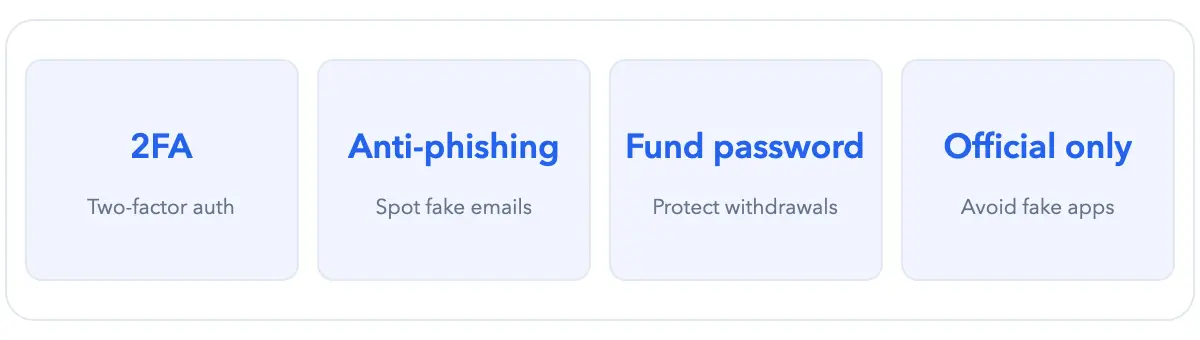
- 2FA — Google Authenticator; a one-time code on login/withdrawal;
- Anti-phishing code — helps you tell real OKX emails from fakes;
- Fund password + withdrawal whitelist — an extra lock on withdrawals;
- Official downloads only — install from the official site or app stores to avoid fakes.
At the platform level
- Scale & liquidity — a top exchange, with deep order books;
- Risk & compliance — relatively complete controls (refer to official disclosures);
- Regional availability — varies by jurisdiction; confirm it's legal where you live.
Want a side-by-side? See OKX vs Binance.
The real risk is usually "you"
Most losses aren't platform hacks — they're phishing sites, fake "support" asking for codes, leaked seed phrases, and high-yield ponzi traps. Stay sharp.
FAQ
Exchange or wallet — what's safer? Trade-offs: an exchange is convenient but holds your keys; a self-custody wallet gives you the keys but you must guard the seed phrase. Spread large holdings. Could OKX collapse? Top platforms are lower-risk but nothing is guaranteed — don't keep everything in one place.
Next steps
Split “Is it safe?” into three layers
Platform risk includes the operating entity, regional permissions, reserve disclosure, and incident history. Account risk includes password reuse, 2FA, passkeys, anti-phishing codes, and withdrawal controls. Usage risk includes wrong-network transfers, fake support, malicious approvals, and leverage. No exchange can remove the last two layers for you.
Check regional availability, reserve information, and current security controls in the OKX Help Center, then decide how much needs to remain on an exchange. Brand recognition alone is not a custody plan for long-term, high-value holdings.
bsvar is independent from OKX and is not its official site. Based on public information and hands-on experience. See our Advertising & Commission Disclosure.