
Exchange Reviews
Binance vs OKX: How to Choose Based on Fees and Availability
Compare Binance and OKX for your actual purchase and withdrawal route: regional access, payment method, trading fees, network charges and account controls.
Binance vs OKX is easier to decide when you compare the services you can actually use, rather than a generic “best exchange” ranking. For a first spot purchase, check whether each platform supports your country of residence, your payment method, the asset you want and your intended withdrawal network. Then compare the amount you would receive after all displayed charges. Neither brand is automatically cheaper or safer for every person.
Start with availability, not a fee headline
An exchange may accept account registration while limiting a particular payment method or product in your location. OKX says the options shown during registration and in an account depend on residence and account conditions; Binance likewise says local rules can affect product availability. Use your real country of residence and the current official interface. If a route is unavailable, a low advertised fee is irrelevant.
Before comparing prices, write down one specific route: the same starting currency and amount, the same asset, the same type of purchase, and—if you plan to move funds—the same destination network. This prevents a card purchase on one service from being compared with a spot order on the other as though they were equivalent.
Compare the full amount received
Both platforms publish maker and taker schedules, but the rate relevant to you depends on the market, order type and account tier. A maker order adds liquidity to the order book; a taker order fills against an existing order. A quick purchase or conversion quote can also differ from the spot order-book price. Read the quote and the applicable fee display for your own route, rather than copying a rate from an old comparison table.
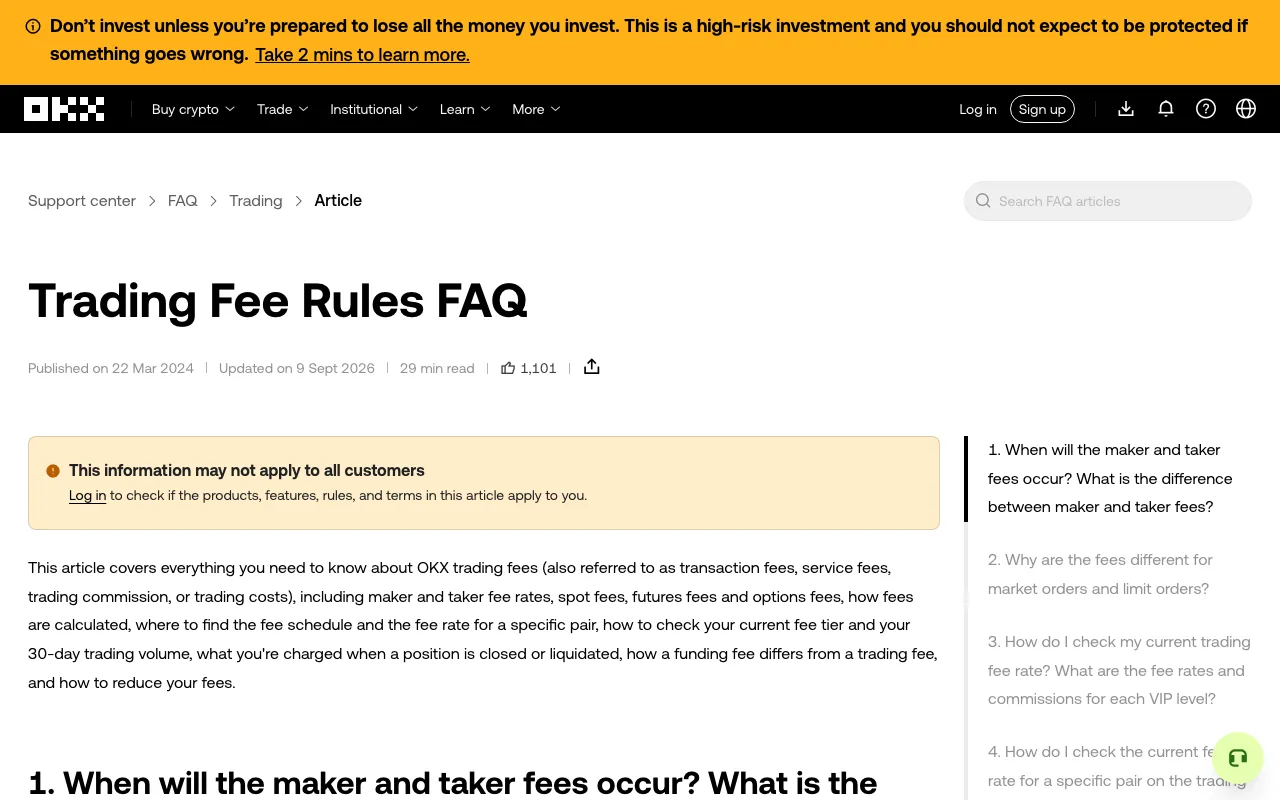
OKX's public fee guide warns that its information may not apply to every customer. Check the rate shown for your account and pair. Source: OKX Trading Fee Rules FAQ.
Use this comparison worksheet for both services:
| Check | What to record |
|---|---|
| Funding | Payment method, quoted exchange rate and any displayed payment charge |
| Trade | Asset pair, order type, quoted or spot price, and the applicable trading fee |
| Withdrawal | Whether your asset and destination network are supported, the displayed withdrawal charge, and the final amount expected at the destination |
If you only plan to keep the asset on an exchange, the withdrawal line is still useful: it tells you what moving it later could involve. If you plan to self-custody immediately, it is essential. Both exchanges tell users to check the withdrawal fee shown at the time of the request. Network choice must also match the receiving wallet or exchange. Our guide to exchange withdrawal fees explains why a trading-fee comparison alone can miss a meaningful cost.
Do not send a transfer just to test a fee. Review the preview before confirming, and when you do make a real withdrawal, verify the asset, network and address carefully. Our Binance wallet-withdrawal guide covers those checks in context.
Compare account controls and custody
For either platform, check which sign-in protections, withdrawal controls and recovery options are available to your account. Turn on a strong second factor and verify the official site before entering credentials. An exchange account is custodial: the platform controls the withdrawal process while your funds remain there. Using two accounts does not remove custody risk, and moving funds between them adds transfer steps.
If OKX is on your shortlist, our OKX security settings review explains practical account protections. Apply the same scrutiny to Binance. Neither a large user base nor a published reserve page guarantees that an individual account or transaction cannot suffer loss.
Which should you choose?
Choose the service that supports your lawful location and intended route, gives you a clear final quote, and offers controls you can use correctly. If both qualify, compare the same small planned purchase on paper using current, account-specific information. The result may change with your payment method, pair, order type or withdrawal network. If neither supports the route you need, do not force a substitute network or misstate your residence.