
Security
Cold vs Hot Wallet: What's the Difference and How to Choose (2026)
Cold vs hot wallet explained: online vs offline, security vs convenience, and how to choose.
Last updated: June 2026 · By the bsvar editorial team
When storing crypto, you'll hear "cold wallet" and "hot wallet." The core difference is one thing: whether it's connected to the internet. Here's the difference and how to choose.
⚠️ Risk warning: A safety explainer, not investment advice. With any self-custody wallet, losing or leaking your seed phrase can mean losing everything. See our Disclaimer.
At a glance
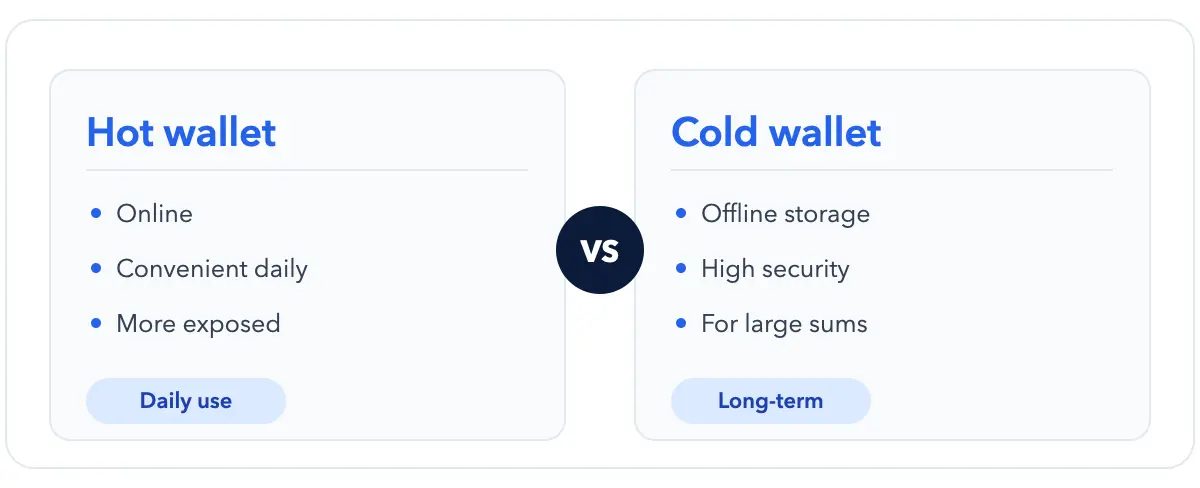
Hot wallet
- Online: mobile apps, browser extensions, exchange accounts all count;
- Convenient for daily transfers, trading and connecting to DApps;
- Because it's always online, it's relatively more exposed (phishing, malicious approvals).
Cold wallet
- Offline storage: hardware wallets, paper wallets — the private key never touches the internet;
- Higher security, ideal for large, long-term holdings;
- Less convenient, and you must safeguard the device and seed phrase.
How to choose
- Small amounts, frequent use → hot wallet (convenient and enough);
- Large amounts, long-term → cold wallet (security first);
- Many people combine both: a little in a hot wallet for daily use, the bulk in cold storage.
Either way, with self-custody you must guard the seed phrase — anyone who has it can take all your assets. Wallet basics: What Is Web3.
FAQ
Is keeping funds on an exchange cold or hot? It's a "custodial hot wallet" — convenient, but you don't hold the keys; turn on 2FA, see Is OKX Safe?. How do I store a seed phrase safely? Offline, written down, backed up in multiple places — never screenshot or share it. Do beginners need a hardware wallet? Not for small amounts; consider one as your holdings grow and you plan to hold long-term.
Next steps
Choose from a threat model, not a label
Small balances used for payments or apps prioritize convenience. Larger, long-term holdings prioritize key isolation, backups, and a tested recovery process. A hardware wallet is not automatically safe: unofficial supply chains, exposed recovery phrases, and blind signing can still cause loss.
Check whether a wallet is open source or security-reviewed, actively maintained, compatible with hardware signing, and recoverable without vendor support. Ethereum.org’s directory can filter for open source, self-custody, and hardware-wallet support, while noting that a listing is not an endorsement: wallet finder.
Content is for reference only. See our Advertising & Commission Disclosure.