
Security
Avoid Crypto Scams: Common Scams and How to Spot Them (2026)
The most common crypto scams and the practical habits that keep your assets safe.
Last updated: June 2026 · By the bsvar editorial team
Crypto is full of opportunity — and scams, which hit beginners hardest. Here are the most common ones and the practical habits that keep your assets safe.
⚠️ Risk warning: A safety explainer, not investment advice. If you've lost funds, contact your local authorities and the platform's official support. See our Disclaimer.
Six of the most common scams
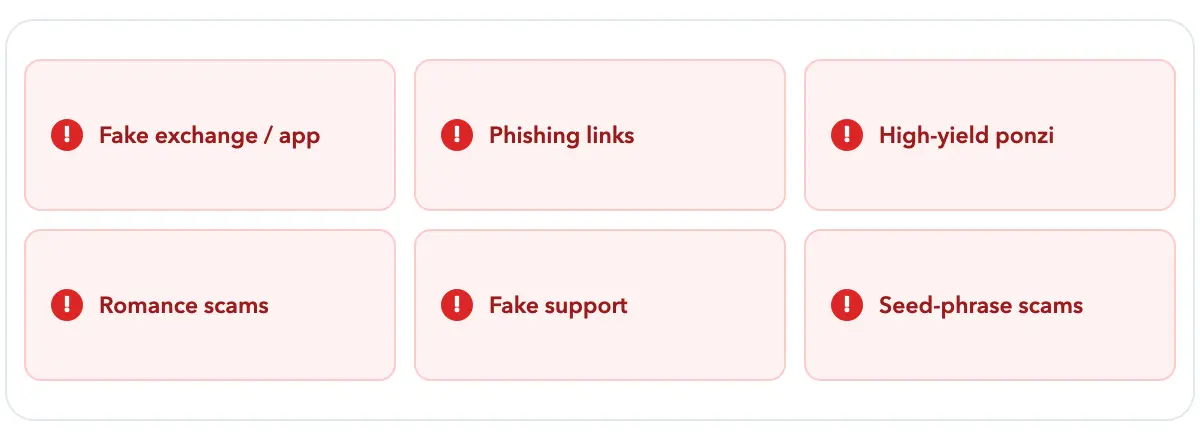
- Fake exchanges / apps — copycat OKX or Binance sites/apps that steal your login. Download only from the official site or app stores.
- Phishing links — fake "official" emails, texts or DMs leading to fake login pages. Set an anti-phishing code and check the domain.
- "High-yield / guaranteed" ponzi schemes — promises of fixed daily returns are almost always scams. There's no guaranteed return.
- Romance / "pig-butchering" scams — trust built over time, then a push to "invest" on a fake platform.
- Fake support — anyone messaging you first and asking for a code or seed phrase is a scammer. Real support never asks.
- Seed-phrase / private-key scams — anything asking you to enter or share your seed phrase is trying to drain your wallet.
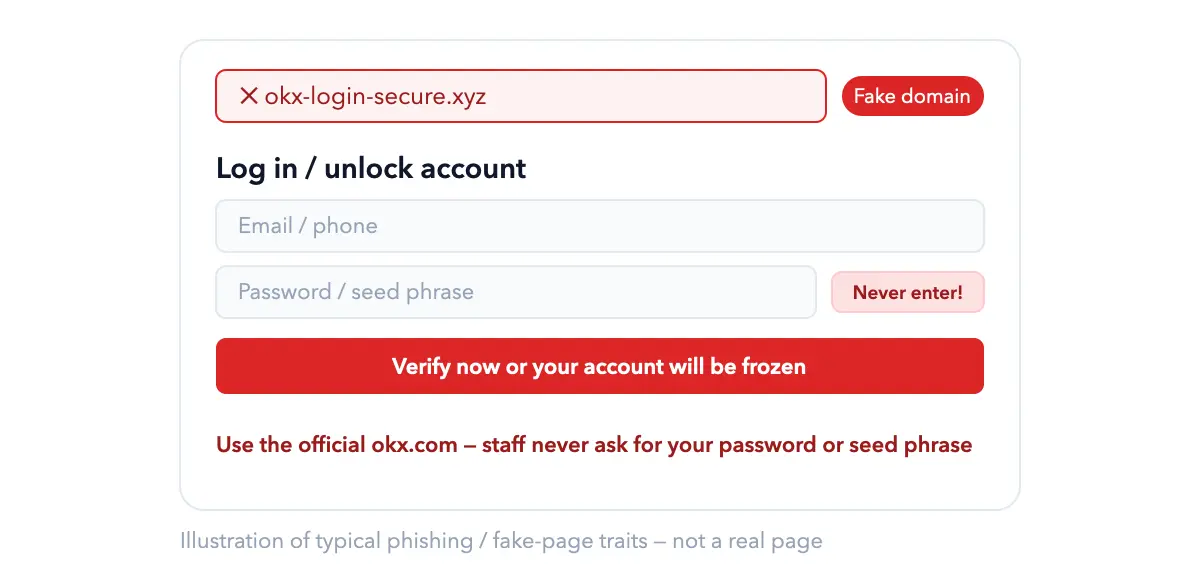
What a phishing page looks like
Compare against this — and always check the domain (illustration):
A few core rules
- Official channels first — site, app and support via official entry points;
- Never share your password, codes, seed phrase or private keys;
- Turn on 2FA;
- Don't chase high yields — the more "guaranteed riches," the bigger the red flag;
- Test small on anything unfamiliar;
- Cross-check big actions against multiple trusted sources.
If you've already been scammed
- Change passwords and freeze affected accounts immediately;
- Keep evidence (chats, transaction records);
- Report to the platform and local authorities;
- Beware of "recovery" services — often a second scam.
FAQ
Will exchange support DM me first? Real support generally uses in-app tickets; unsolicited DMs asking for info are fake. Can I ever share my seed phrase? Never. It's the key to your wallet.
Next steps
A ten-minute check before sending anything
Pause the payment. Search the project or person’s name with “scam,” “review,” and “complaint.” Check whether the official domain and social accounts link to each other. Treat guaranteed returns, urgency, recovery-phrase requests, verification-code requests, and instructions to move money to a “safe account” as stop signs.
If you already sent funds, preserve the chat, domain, wallet address, transaction hash, and payment evidence. Contact the service used and report it to the relevant local authority. The FTC identifies guaranteed profits, free-money promises, unsolicited investment help, and demands for crypto payment as common scam patterns. Primary reference: FTC crypto-scam guidance.
Content is for reference only. See our Advertising & Commission Disclosure.