
Security
How to Spot a Fake Exchange or App: 4 Checks (2026)
Four checks to spot fake exchange sites and apps: domain, download source, cross-check, and high-return bait.
Last updated: June 2026 · By the bsvar editorial team
Copycat OKX/Binance sites and fake apps are a top reason beginners lose money. Here are 4 quick checks to spot them and protect your account and assets.
⚠️ Risk warning: A safety explainer, not investment advice. If you've lost funds, report to local authorities and the platform's official support. See our Disclaimer.
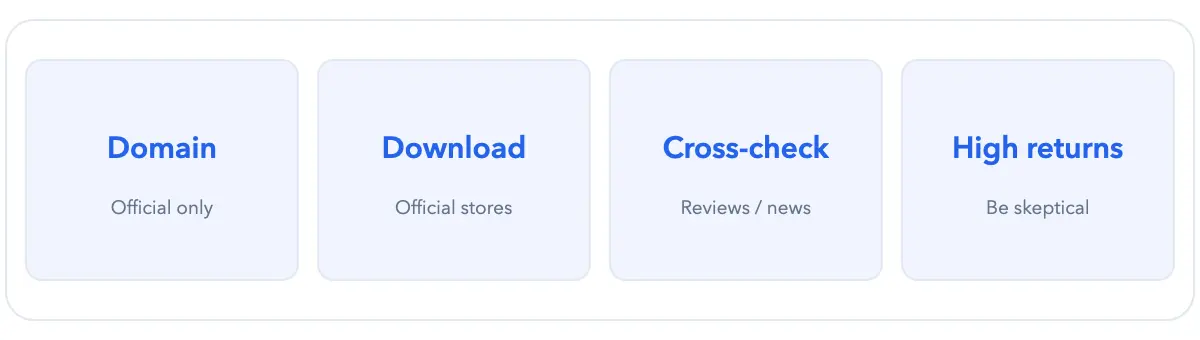
The 4 checks at a glance
1. Check the domain
Fakes use look-alike domains (okx-login.xyz, 0kx.com). Trust only the official domain, enter from a bookmark or official channel, and don't click "log in" links in random messages.
2. Check the download source
Only install apps from the official site or official app stores. Third-party links, APKs shared in groups, or QR-code downloads can be trojaned clones that steal your account and assets.
3. Cross-check
Verify via official announcements, official social accounts and trusted sources. The official entry points in our guides (e.g. The Complete OKX Guide) can help.
4. Beware "high returns" and "guaranteed" talk
Anything promising "sign-up bonuses," "guaranteed profit," or pushing you to deposit with big rebate bait is a red flag. Real platforms don't recruit that way.
Anyone asking for your password, codes or seed phrase is a scammer. More patterns: Avoid Crypto Scams.
FAQ
How do I confirm an app is genuine? Reach the app store via the official site, check the developer, and avoid unknown installers. I entered my password on a fake site — now what? Immediately change your password on the official site, enable/check 2FA, freeze affected accounts and keep evidence.
Next steps
A two-minute verification routine
Find the official domain independently instead of using an ad, group chat, or direct-message link. HTTPS and a padlock do not prove a site is genuine; phishing sites can use certificates too. For an app, compare the developer, review history, and the store link reached from the official website.
Stop if a page requests a recovery phrase, remote control, a deposit to “unfreeze” an account, or guaranteed returns. Search the company or project name with “scam” and “complaint.” The FTC recommends this check and warns that fake investment sites may display fictional gains while blocking withdrawals: FTC crypto-scam guidance.
Content is for reference only. See our Advertising & Commission Disclosure.