
Coin Basics
What Is Ethereum? A Plain-English Guide to ETH (2026)
What is Ethereum? ETH explained: smart contracts, gas, DApps and how it differs from Bitcoin.
Last updated: June 2026 · By the bsvar editorial team
If Bitcoin is "digital gold," Ethereum is more like a global, public computer. It's the second-largest cryptocurrency — here's what it is, in plain English.
⚠️ Risk warning: Educational content, not investment advice. Crypto is highly volatile and risky. See our Disclaimer.
Core features
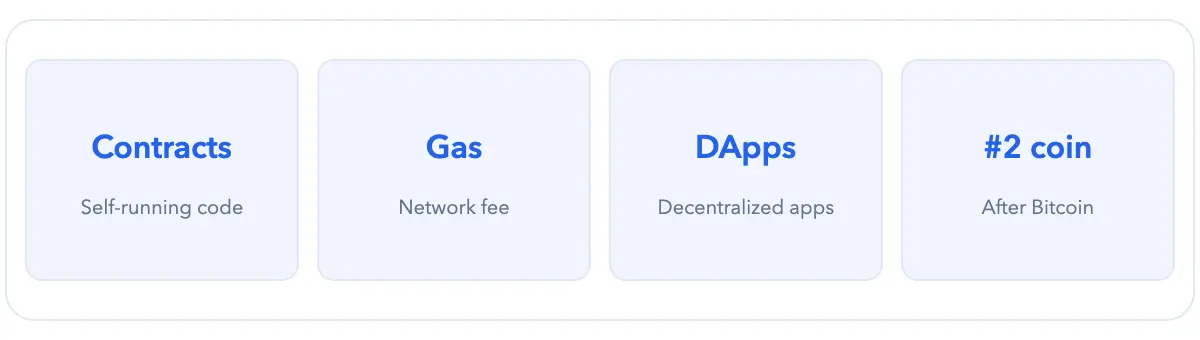
- Smart contracts — programs that run automatically on-chain; Ethereum's big innovation;
- ETH & gas — ETH is the native coin; transactions and contract interactions cost "gas" (a fee);
- DApps — decentralized apps built on Ethereum;
- #2 coin — long the second-largest crypto by market cap, after Bitcoin.
Ethereum vs Bitcoin
- Bitcoin is mainly a store of value ("digital gold"), relatively single-purpose;
- Ethereum is a programmable platform that runs smart contracts and apps — most DeFi and NFTs live on it or similar chains. For the wider picture see What Is Web3.
What ETH is used for
- Paying gas for on-chain transactions;
- Taking part in DeFi, NFTs and other apps;
- As an investment/trading asset (high risk — be rational).
How to get ETH
Like Bitcoin, the simplest way is buying on an exchange. See How to Buy Bitcoin (swap BTC for ETH).
FAQ
Do I need to understand smart contracts to buy ETH? No — buying and selling ETH on an exchange works just like any other coin. Why is gas sometimes expensive? Gas rises when the network is congested — one reason newer chains exist. Will ETH overtake Bitcoin? No one can predict prices — don't treat any "flippening" claim as investment advice.
Next steps
Ethereum, ETH, and smart contracts are different things
Ethereum is the network and execution environment. ETH is its native asset. A smart contract is a program deployed on-chain. Calling a contract sends a transaction and consumes gas; the code runs according to its rules and the result is generally irreversible. This distinction explains why holding ETH and interacting with a DeFi contract involve different risks.
Before using a contract application, verify the domain, contract address, network, and approval amount. Primary reference: Ethereum.org’s smart-contract introduction.
Content is for reference only. See our Advertising & Commission Disclosure.