
Coin Basics
What Is USDT? Stablecoins Explained for Beginners (2026)
What is USDT? Stablecoins explained: the dollar peg, why crypto uses them, and multi-chain transfers.
Last updated: June 2026 · By the bsvar editorial team
New to crypto, you'll notice everyone trades through "USDT" first. What is it, and why is it everywhere? Here's the short version.
⚠️ Risk warning: Educational content, not investment advice. Stablecoins carry de-peg and issuer risks too — they aren't "perfectly safe." See our Disclaimer.
Core features
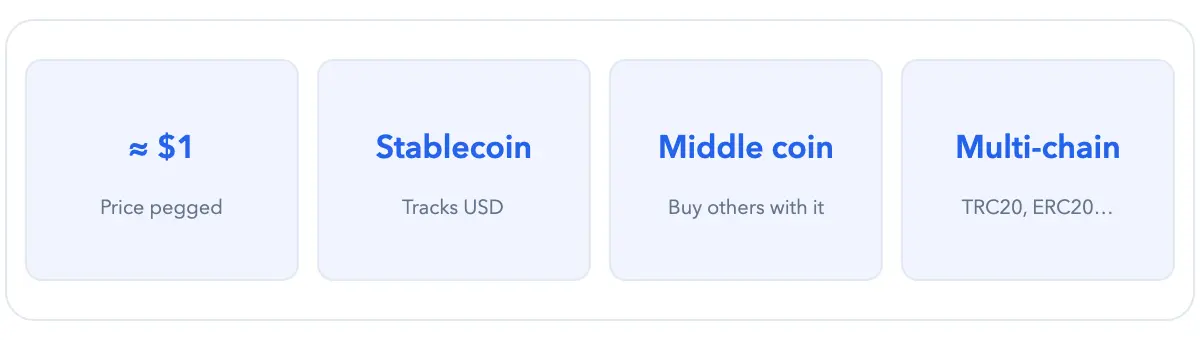
- Pegged price — 1 USDT is designed to ≈ 1 US dollar, so it stays relatively stable;
- Stablecoin — a class of crypto pegged to fiat (usually USD); USDT and USDC are the most common;
- The "middle" currency — to buy other coins you usually convert to USDT first;
- Multi-chain — the same USDT exists on different chains (TRC20, ERC20…).
Why crypto relies on stablecoins
Crypto prices swing hard, so stablecoins let you:
- Park value when the market turns, without leaving crypto;
- Trade easily — most pairs are "coin / USDT," the common unit of account;
- Move funds between exchanges and wallets.
Multi-chain: the easiest mistake
The same USDT has different addresses on different chains, so the chain must match when you transfer (if the sender used TRC20, you must use TRC20). The wrong chain can mean lost funds — see How to Deposit USDT.
Are stablecoins safe?
A stablecoin holds its peg via the issuer's reserves, so there's de-peg and issuer-trust risk. Stick to major stablecoins and don't park large amounts on a single platform long-term.
FAQ
USDT vs USDC? Both are USD-pegged stablecoins from different issuers; major exchanges support both. Could USDT stop being worth $1? It can briefly de-peg in extreme conditions; majors usually recover, but watch the risk.
Next steps
“Stable” does not mean risk-free
USDT targets a US-dollar peg, but users still face issuer and reserve risk, exchange-custody risk, blockchain or bridge risk, and temporary market depegging. A balance of 1 USDT on-chain states the token amount; it does not guarantee that every holder can redeem it for one dollar at any time or through every venue.
Confirm the specific network before transferring. Tokens with the same name on different chains are not automatically interchangeable. Tether says it publishes circulation and reserve information; verify the current disclosure on its transparency pages rather than relying on screenshots or social posts.
Content is for reference only. See our Advertising & Commission Disclosure.