
Web3 & DeFi
What Is Web3? Wallets, DeFi and DEX Explained (2026)
What is Web3? Wallets, DeFi, DEX and airdrops explained for beginners.
Last updated: June 2026 · By the bsvar editorial team
"Web3" is one of crypto's biggest buzzwords. Here's what it actually means — plus the wallet, DeFi and DEX concepts you keep hearing about.
⚠️ Risk warning: Educational content, not investment advice. Web3 and DeFi carry higher risk and more scams — tread carefully. See our Disclaimer.
From Web1 to Web3
- Web1 (read-only) — early web pages you could only browse;
- Web2 (interactive) — social, user-generated content, but platforms own your data;
- Web3 (ownable) — built on blockchains, emphasizing decentralization and you owning your assets and data.
Key concepts
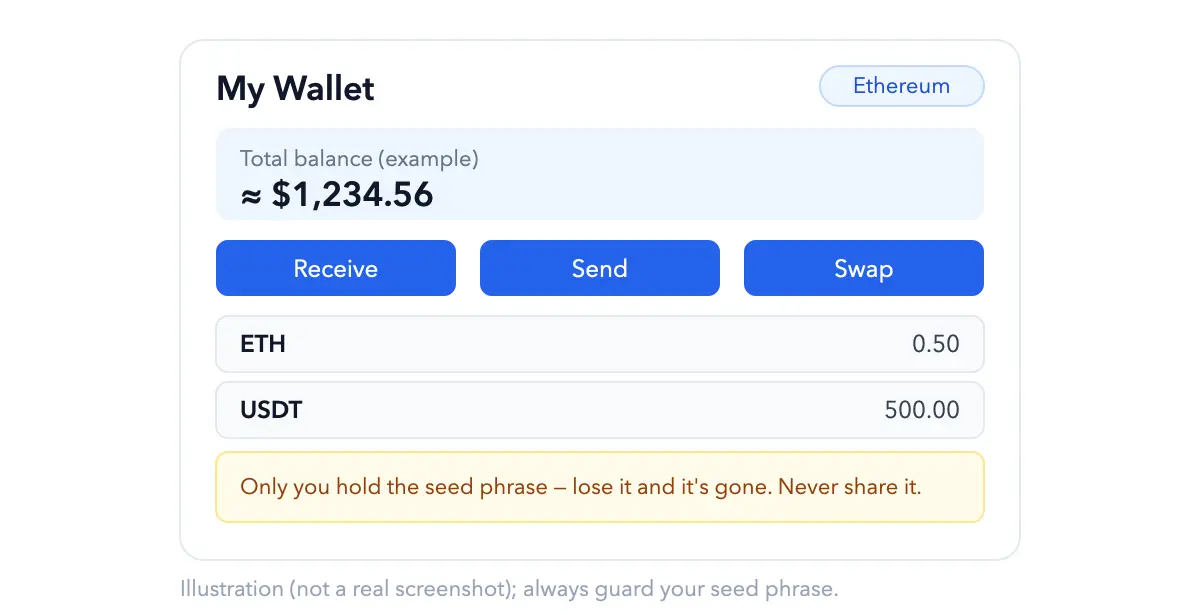
- Crypto wallet — your identity and gateway in Web3. Either exchange-custodied or self-custody (e.g. MetaMask, OKX Wallet). With self-custody, you guard the seed phrase — lose it and it's gone.
- DeFi (decentralized finance) — lending, trading and more via smart contracts, no traditional middlemen.
- DEX (decentralized exchange) — trade on-chain straight from your wallet, vs a centralized exchange (CEX) like OKX or Binance.
- Airdrop — free token distributions; also a hotspot for scams, so be careful.
What a wallet looks like
What beginners should watch
- Guard your seed phrase — never screenshot, upload or share it;
- Beware high-yield and airdrop scams — see Avoid Crypto Scams;
- Start simple — learn on a centralized exchange first; see How to Buy Bitcoin.
FAQ
Do I need a wallet for Web3? A self-custody wallet is the key to most Web3 apps, but you take on the responsibility of guarding it. Is DeFi safe? Smart contracts can have bugs and projects can fail — risk is higher than on major exchanges. Is Web3 the same as trading coins? Not exactly — trading is just one part of a broader set of technologies.
Next steps
A four-question Web3 test
Ask who controls custody, whether important state can be verified on a public chain, whether users can leave with their assets or identity, and what still works if the project team disappears. Issuing a token or adding wallet login does not by itself make a product decentralized.
Web3 gains verifiability and composability, but users take on irreversible transactions, smart-contract risk, and greater custody responsibility. Before connecting to an app, verify the domain, network, and requested permissions; periodically remove approvals you no longer need.
Content is for reference only. See our Advertising & Commission Disclosure.