
Security
Is OKX P2P Safe? Scam and Account-Freeze Checklist (2026)
Practical controls for OKX P2P: verified-name payments, real balance checks, in-order chat, evidence, and appeals.
Platform escrow reduces one part of counterparty risk, but it cannot verify a bank balance for you or guarantee that incoming funds have a lawful source. Safer P2P use depends on staying inside the order, matching verified names, confirming real receipt, and keeping evidence.
Before paying as a buyer
Review completion history, account age, terms, and the remaining order time. Pay only from an account in your own verified name. Do not rush a payment when the order is about to expire, and reject attempts to move the conversation to WhatsApp, Telegram, or another private channel.
Before releasing as a seller
Never rely on a screenshot, text alert, or “processing” message. Log in to the bank or payment app and confirm the correct amount is final. Compare the payer’s name with the verified account. Third-party, split, or refund-to-another-account requests add fraud and source-of-funds risk.
Common patterns
- A modified receipt without real payment.
- Payment after the platform order has expired.
- One receipt reused across same-value orders.
- Fake support pressuring the seller to release.
- A request to cancel and complete the trade privately.
OKX tells users to remain in the in-app chat, avoid payment after timeout, use Appeal promptly, and preserve chats, receipts, emails, and order IDs: official P2P scam guidance.
If a bank or platform account is restricted
Stop further transfers and save the order, counterparty name, bank record, and messages. Ask the bank which organization imposed the restriction and what evidence it needs. A judicial freeze must normally be handled with the named authority; a platform cannot substitute for law enforcement. Ignore anyone charging for an “inside unfreeze.”
Why account freezes happen even to honest users
The freeze risk in P2P is not primarily about being scammed on the trade. It is about the source of the money you receive.
If a buyer pays you with funds that were themselves obtained fraudulently, and the original victim later reports it, the payment can be traced to your bank account. In several jurisdictions this triggers an administrative or judicial freeze on your account while the matter is investigated — regardless of whether you knew anything about it. You completed a normal trade and still end up frozen.
Nothing eliminates this risk entirely. What reduces it is trading with counterparties who have long histories and high completion rates, keeping every step inside the platform's order flow, insisting on a payer name matching the verified account, and refusing unusual payment structures.
The habits that reduce exposure most
- Never leave the order. Off-platform contact removes your evidence and the platform's ability to arbitrate.
- Never accept third-party payment. If the name does not match, decline and appeal rather than releasing.
- Never release on a screenshot. Log in to the bank yourself and confirm the funds are final, not merely "processing".
- Never trade under time pressure. Urgency manufactured by a counterparty is a tell, not a constraint.
- Keep complete records — order ID, chat log, counterparty name, bank record, timestamps. If a freeze happens months later, this is the only thing that helps you.
- Do not concentrate volume. Large, frequent P2P flows attract more risk-control attention than occasional trades.
If it happens anyway
Stop all further transfers immediately — continuing to trade on a flagged account compounds the problem. Establish which body imposed the restriction: a platform risk control, the bank itself, or a judicial authority. Those are three different processes with three different resolutions, and only the first is something exchange support can address.
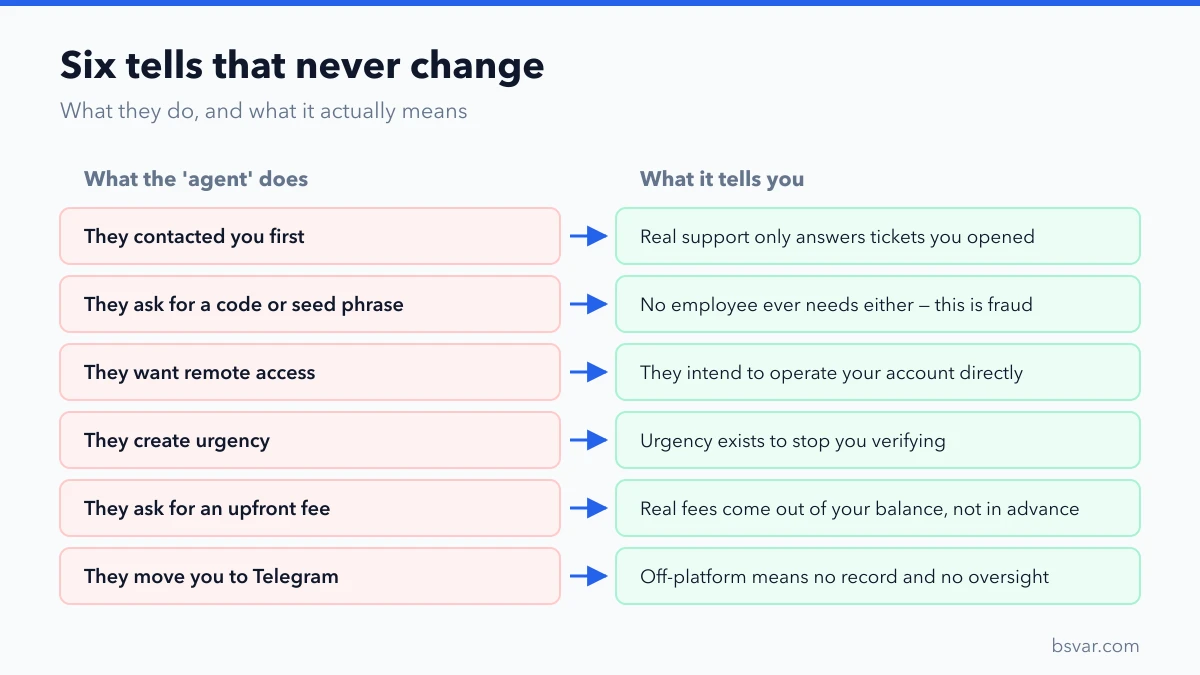
Gather your records before contacting anyone, then respond to exactly what is requested. And ignore every offer of a paid "inside unfreeze" — no such channel exists, and pursuing it adds a second loss to the first. See Fake Support Scams: Six Tells That Never Change.
FAQ
The buyer clicked Paid. Can I release? No. Confirm actual receipt in your own bank or payment app.
Can a family member pay? Name mismatch may violate platform rules and raise risk.
Should I cancel before appealing? Use the original order’s Appeal process first and follow official instructions.
General safety information, not legal advice. Availability and rules vary by jurisdiction.